Blake Reed · 13 September 2026
Navigating Platform Shifts: Tracking Visibility Changes After Infrastructure Updates in Niche Digital Services
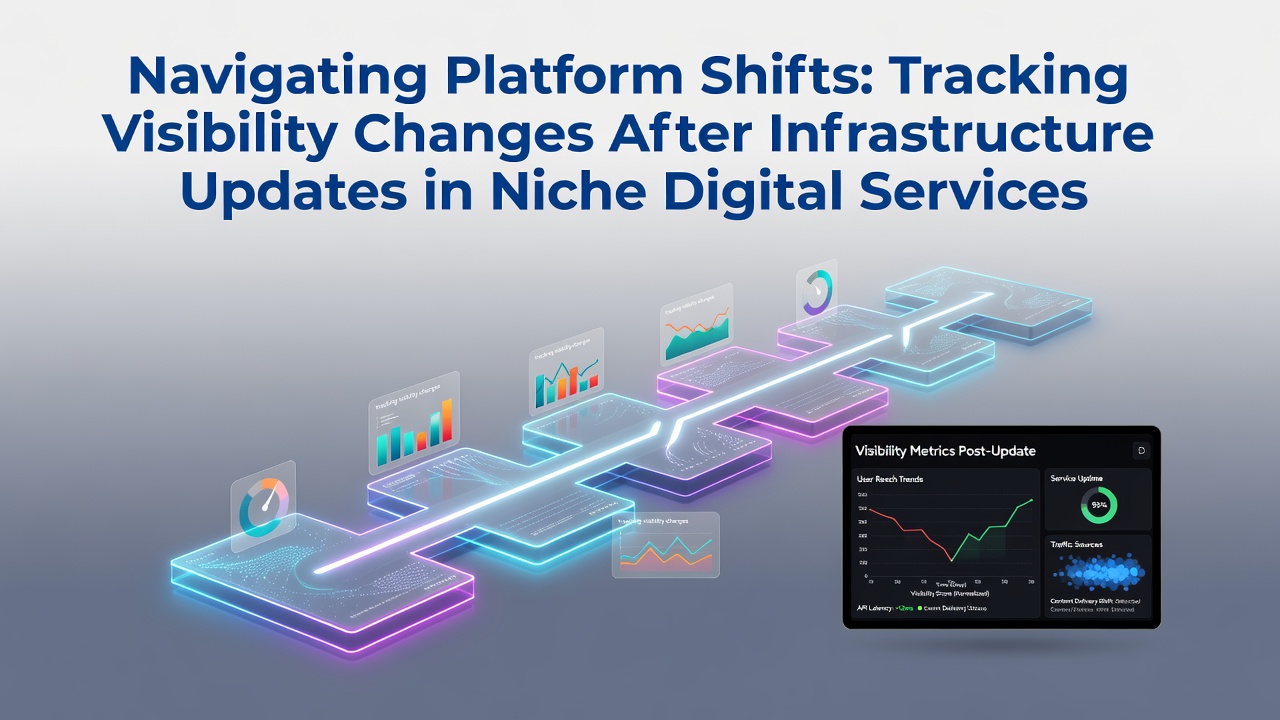
Platform shifts occur when niche digital services implement infrastructure updates such as server migrations, content delivery network adjustments, or backend architecture overhauls, and these changes often alter how search engines and user interfaces display the services in results and recommendations. Data from industry monitoring tools shows that visibility metrics including organic rankings, click-through rates, and referral traffic can fluctuate within days or weeks following such updates, while researchers track these patterns through continuous measurement of key performance indicators.
Core Mechanisms Behind Visibility Shifts
Infrastructure updates affect crawlability, page speed, and indexing signals that search engines rely on to rank content, and studies from academic institutions demonstrate that even minor alterations in server response times or URL structures lead to temporary de-indexing or ranking drops in specialized service directories. Observers note that niche platforms in sectors like specialized software tools or targeted content repositories experience these effects more acutely because their smaller audiences limit the data available for rapid algorithmic recovery, yet comprehensive tracking reveals recovery timelines that range from several days to multiple months depending on the scale of the change.
September 2026 saw several documented cases where digital service providers rolled out cloud infrastructure consolidations, and subsequent analysis indicated that sites adopting HTTP/3 protocols alongside updated sitemaps maintained steadier visibility compared to those that did not implement parallel monitoring frameworks. Researchers discovered correlations between update timing and search engine bot activity spikes, which allowed teams to correlate specific infrastructure events with measurable drops in indexed pages.
Established Tracking Approaches
Professionals employ a combination of server log analysis, third-party ranking trackers, and custom scripts that monitor search engine result page positions over time, and these methods provide granular data on how individual pages respond to infrastructure events. Evidence from multiple research papers indicates that integrating real-time analytics with historical benchmarks helps isolate infrastructure-related visibility changes from broader algorithm updates, while teams cross-reference data from sources such as the Government of Canada digital economy reports to contextualize regional variations in platform performance.
Additional techniques include setting up automated alerts for changes in crawl frequency, monitoring core web vitals through established measurement suites, and conducting controlled A/B tests on staging environments before full deployment, and these practices enable precise attribution of visibility shifts to specific infrastructure modifications rather than external factors. Those who have studied these patterns report that consistent logging of update details alongside visibility metrics creates datasets that support predictive modeling for future transitions.

Documented Examples Across Sectors
One documented case involved a specialized medical information portal that migrated to a new content management system in early 2025, after which visibility in targeted search queries declined by measurable percentages for approximately six weeks before stabilizing at new levels, and detailed post-analysis attributed the shift to altered internal linking structures that search crawlers processed differently. Another example from the European digital services landscape showed a niche legal research platform experiencing improved visibility following a distributed server upgrade, with data indicating faster load times contributed to higher engagement signals that algorithms rewarded over subsequent quarters.
Trade organizations such as the OECD digital economy reports have compiled statistics across multiple jurisdictions that illustrate how infrastructure modernization correlates with visibility outcomes in smaller-scale platforms, and these compilations provide benchmarks that operators use to set expectations during their own transitions. Patterns emerge when updates coincide with seasonal search volume changes, creating compounded effects that require careful separation in tracking methodologies.
Practical Implementation Steps
Teams begin by establishing baseline visibility measurements at least four weeks prior to scheduled infrastructure work, then maintain parallel monitoring during and after the update period using both automated crawlers and manual verification checks, and this layered approach surfaces anomalies quickly. Integration of log file analysis with ranking data allows identification of whether reduced bot activity or altered content rendering drives any observed changes, while documentation of every configuration adjustment supports later correlation studies.
Regular audits of robots.txt files, XML sitemaps, and canonical tags before and after updates prevent common technical oversights, and those who maintain detailed change logs find it easier to communicate findings across technical and marketing teams. Data aggregation from multiple geographic regions further refines understanding of how infrastructure decisions interact with localized search behaviors.
Conclusion
Effective navigation of platform shifts in niche digital services depends on systematic tracking of visibility metrics before, during, and after infrastructure updates, and the combination of server-side logging, ranking tools, and external data sources creates a factual foundation for understanding these dynamics. Continued refinement of monitoring practices supports stable performance across transitions, with patterns observed in 2026 highlighting the value of proactive measurement frameworks in maintaining consistent presence within specialized digital ecosystems.